
Selecting an anaerobic chamber is only the first step. Configuring it for the specific demands of your research, including the specific bacterial species, media types, sample volumes, and throughput requirements, determines whether that chamber delivers reliable results for years or becomes a source of recurring maintenance issues.
Coy Vinyl Anaerobic Chambers maintain oxygen levels at 0–5 parts per million (ppm) through a hydrogen-palladium catalytic system, providing the strict anaerobic environment required for conducting oxygen-sensitive research. This includes:
However, sustaining those conditions across diverse applications requires the right combination of environmental controls: temperature management, moisture control, hydrogen sulfide (H₂S) mitigation, and gas management automation.
This article covers the most common use cases and the environmental control considerations that accompany each, so that researchers and procurement teams can make informed configuration decisions from the start. For chamber sizing, capacity, and cost of ownership, see our companion article: “Top Considerations for Choosing Your Coy Vinyl Anaerobic Chamber.”
Bacterial Cultivation Protocols present diverse environmental challenges based on species-specific metabolic characteristics. The gases, moisture, and corrosive byproducts generated inside the chamber vary depending on what you are growing, how much, and under what conditions.
High hydrogen sulfide producers like C. difficile represent the most demanding scenarios. Gut microbiome communities and gram-negative bacterial applications also generate significant H₂S, with concentrations scaling by sample size, temperature, and media composition. Even applications that appear low-risk initially can accumulate H₂S over time.
Biochemical Studies such as anaerobic protein crystallography generate less contamination or moisture and are typically well-suited to more basic chamber configurations with fewer environmental control add-ons.
High-Throughput Screening Operations benefit from automated environmental management and dehumidification for consistent conditions across extended experimental timelines. These operations often involve third-party instruments inside the chamber such as microplate readers, liquid handlers, or robotic systems, some of which may require custom-sized chambers to accommodate.
Cysteine-Containing Media universally generate H₂S within anaerobic environments. Cysteine is a common reducing agent in anaerobic media formulations, and its breakdown under anaerobic conditions produces H₂S as a byproduct. Contamination severity compounds with cell density and incubation parameters, making media selection a critical consideration when specifying environmental control systems.
Liquid Media Applications generate substantially elevated moisture loads compared to solid media. Heated chambers running liquid media at 37°C produce significantly more moisture than unheated chambers using the same media with a separate incubator. Solid Media Systems present reduced moisture challenges but still require monitoring at high sample volumes.
Heated Chamber Systems convert the entire chamber into an incubation environment at 37°C, providing economical incubation with substantial capacity that accommodates variable-dimension containers and non-standard sample vessels. The trade-off is that operators work at elevated hand temperatures, which can impact comfort during extended manipulations.
Unheated Chambers with Internal Incubation (using the Coy Model 2000) maintain ambient hand temperatures during manipulations. The higher initial investment is offset by enhanced operator comfort and reduced moisture generation.
Ambient Temperature Configurations are the most economical solution for protocols not requiring thermal control, minimizing heating-related moisture generation beyond the point of concern.
Excess moisture creates two categories of problems. First, it promotes microbial contamination that can complicate or completely invalidate experimental results. For labs running multi-day or multi-week cultivation protocols, a contamination event caused by uncontrolled humidity can mean significant losses in time, reagents, and data. Second, moisture condenses onto electronic components, sensors, and catalyst systems, compromising equipment functionality and accelerating hardware degradation.
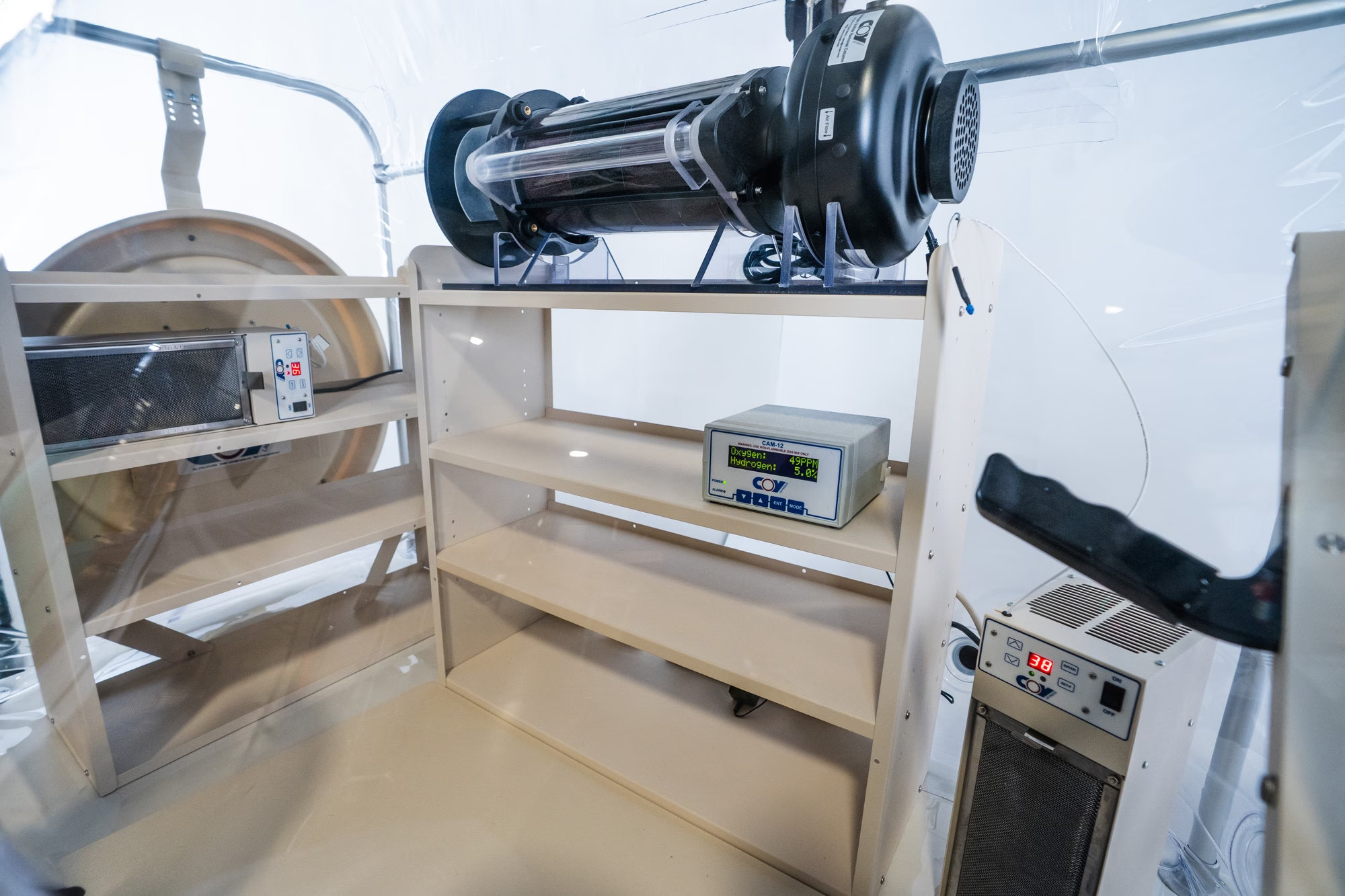
Coy’s built-in dehumidifier operates as a cold wall to condense moisture from the chamber air, removing excess humidity without the use of desiccants. System integration dramatically extends equipment lifespan and maintains environmental stability across diverse experimental conditions.
Note that the lab atmosphere can also affect the dew point or condensation levels. Issues with heating or air condition ducts can create hot or cold spots where moisture may condense, and windows may introduce sunlight or UV rays that degrade the vinyl faster.
Hydrogen sulfide is the single most damaging environmental threat to chamber performance. H₂S corrodes metallic components and electronic systems, and can cause unprotected sensors to fail within three months in severe applications. Microplate readers, CAM-12 sensors and display units, and all metallic surfaces face degradation risk.
Researchers at the University of Michigan demonstrated the value of proactive H₂S mitigation: running 150–300 plates of C. difficile (far exceeding typical study volumes) they saw sensor and catalyst lifespan improve by 300% after installing Coy’s Hydrogen Sulfide Removal Column (HSRC).
Combined H₂S filtration and dehumidification represents the optimal strategy for challenging applications, capable of tripling equipment lifespan. Hydrogen sulfide plus moisture is the most damaging environmental combination, requiring comprehensive mitigation for long-term viability.
Manual H2 gas maintenance protocols (required every 1–2 weeks) frequently result in excessive gas consumption through operator error, gas loss during airlock cycling, inconsistent environmental conditions between cycles, and elevated operational costs over the chamber’s lifetime. Coy’s Anaerobic Gas Infuser (Model 15) provides computer-controlled automation that eliminates these variables, working with the CAM-12 gas analyzer to pulse controlled amounts of hydrogen gas mix without operator intervention.
Facilities have validated automation’s value by scaling from single-unit evaluation to 20-chamber installations after quantifying performance improvements. For university environments or multi-user facilities with high operator turnover, automation is particularly valuable because it eliminates inconsistencies caused by varying levels of user experience.
The right configuration depends on the intersection of your application requirements, throughput demands, and long-term operational goals. By evaluating bacterial species, media composition, sample volumes, and equipment integration needs before purchasing, laboratories can specify environmental controls that protect both research integrity and capital investment from day one. Strategic integration of dehumidification, H₂S removal, and gas management automation during the initial procurement phase prevents the most common, and most costly, operational issues.

Talk to us about your research requirements, and we’ll discuss customization options to ensure your Coy chamber meets your specifications.
